Why Fryer Baskets Rust: Chlorides, Cleaning Chemicals and the Fixes
The basket came back from the wash rack dotted with orange, eight months into a two-year plan. Nobody changed suppliers. Nobody dropped it. What changed was the degreaser — the new one runs bleach-based, and bleach is a chloride, and chlorides are the specific chemical that eats the passive layer off stainless steel. Rust on a fryer basket is rarely bad luck. It has a cause list, and the cause list is shorter than most operators expect.
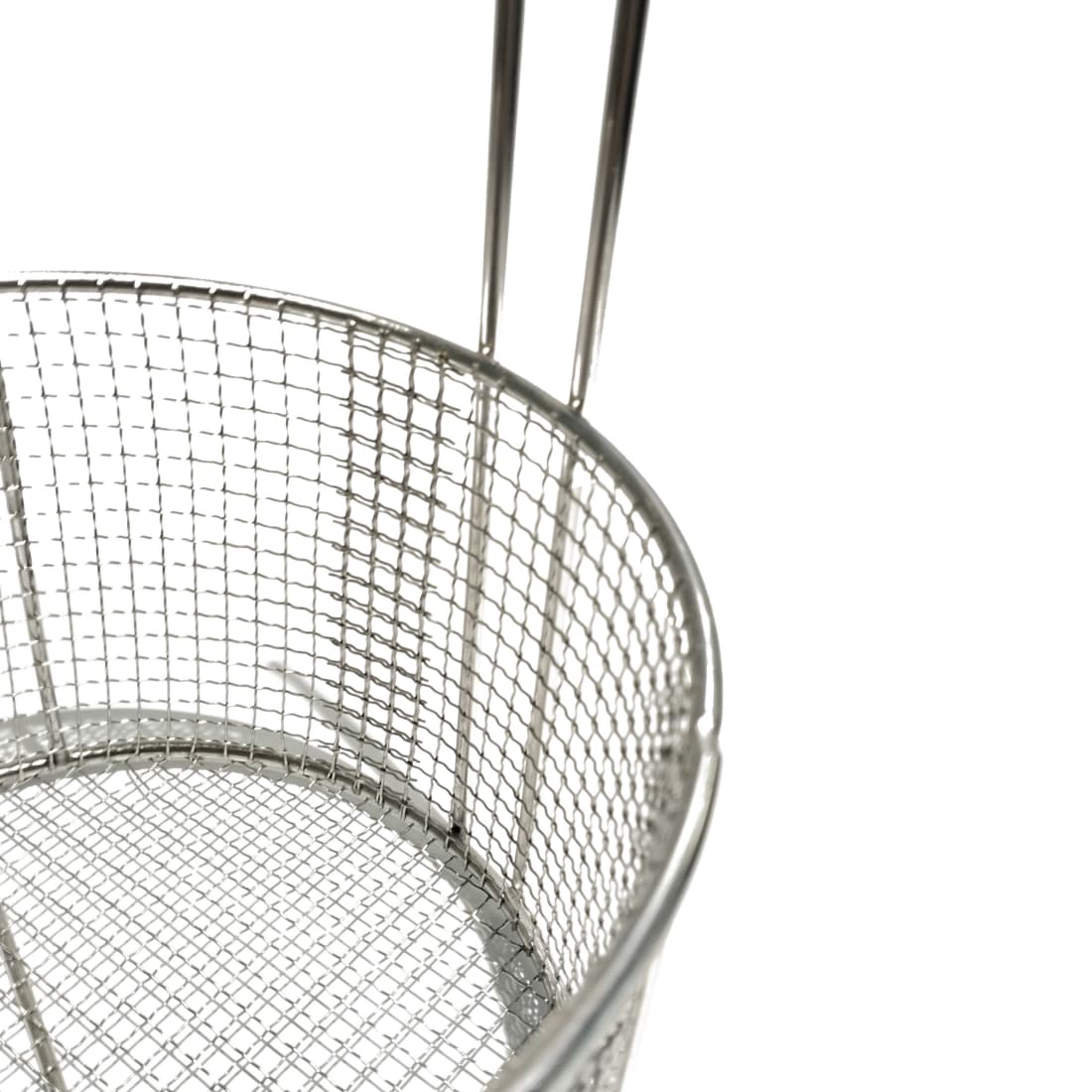
The passive layer: what actually keeps stainless stainless
Stainless steel does not fight rust with a coating. It fights it with chemistry: the chromium in the alloy reacts with oxygen in the air and forms a chromium oxide film a few nanometers thick, invisible and self-repairing. Scratch it and the chromium underneath reforms the film within hours, provided oxygen can reach the surface. That self-repair is the entire reason a fryer basket survives a decade of hot oil, thermal cycling and nightly scrubbing.
Chlorides break the deal. Chlorine ions penetrate the passive film faster than the chromium can rebuild it, and where they get through, the iron in the alloy oxidizes instead — orange, flaky, and self-accelerating once it starts. This is why a basket can look perfect on the mesh face and pit through at the welds: weld zones and rim edges have a thinner, more disturbed passive layer than the rolled sheet, so the chemistry finds them first.
Heat adds a wrinkle. A fryer basket lives its working life well above the temperature where the passive layer behaves, then plunges into washdown chemistry at the end of the shift. The cycle is survivable — millions of baskets prove it daily — but it explains why the chemistry matters so much. A basket does not get one chance to fight corrosion per day. It gets one chemistry, and the wrong one wins.
Where the chlorides come from
The degreaser is the usual suspect. Bleach-based and chlorinated degreasers are common on wash racks because they cut carbonized grease fast, and they attack the chromium oxide layer with the same efficiency. KaTom's corrosion guide for commercial kitchen equipment names harsh chemicals — bleach and strong acids specifically — as a leading cause of stainless corrosion, and a fryer basket soaks in whatever chemistry the wash rack uses. A basket washed nightly in a chlorinated degreaser is a basket being pickled on a schedule.
The food carries its own chlorides in. Salted batter is the obvious one — a fish-and-chips line runs brine, seasoned flour and beer batter through the same basket all day, and every one of those coats the mesh with salt that concentrates as the oil bakes the water off. Watch where the rust lands on a seafood basket: the rim, first, just below the hanger, where batter foams up and bakes on during the drop. Scrape it off at closing, scrub it at the rack, and each cycle takes a little more of the passive film with the batter. A basket over a fryer running nothing but dry-seasoned fries can sit for years without a spot. Same steel, same kitchen, different menu.
Then the rack itself does the damage. A wet basket stacked face-to-face with another wet basket holds a film of washdown water between the mesh panels all night, and kitchen tap water is not neutral — it carries enough dissolved chlorine and minerals to work on the passive layer for the eight hours nobody is watching. By morning the water has evaporated through the edges and left its minerals as a chalky ring along the weld lines. The response everybody has is to scrub harder with the same green pad, which strips more film and guarantees the ring comes back darker. KaTom's corrosion guide lists standing moisture and skipped drying among the direct causes; a corner stack of wet baskets is the textbook version.
Reading the rust: staining, pitting and the point of no return
Orange film that wipes off with a thumb is surface staining — the passive layer is stained with iron oxide from a neighboring surface or a chloride flash, but the film underneath is intact. Clean it, dry the basket, and it comes back to service. This is the stage where almost everything is recoverable, and it is also the stage nobody takes seriously because the film wipes off.
Small craters that do not wipe off are pitting, and pitting is a one-way door. Each crater is a place where chlorides got through the film and consumed metal. The crater traps carbon, oil and moisture, sheds flakes into the fryer, and grows every thermal cycle. Chemically stripping the pit back to clean metal thins the wire at exactly the spot where it is already thinnest. A pitted basket is a basket on borrowed time — the question is only how many flakes you are willing to serve with the fries.
Then there is the weld. A basket we got back from a fish-and-chips shop last spring tells the story better than a checklist: mesh face still gray and clean, rim edge clean, and the two long seam welds along the sides furred orange from end to end. The shop had done nothing wrong that they knew about. Their soak tub, it turned out, was an old brine tub that had never quite stopped being one. Check the welds first on any basket that comes back spotted — drag a fingernail along the seam and look at what comes away on it. Orange dust means staining, and staining comes off. A crater that catches the nail is different: that is metal gone, at the exact joint holding the mesh to the frame, and no chemical brings it back. What a sound weld looks like on a first-article sample is covered in our custom basket guide; the same fingernail test tells you whether a working basket keeps its joint.
The routine that keeps baskets gray
Start with the jug the baskets actually get washed in. A kitchen we work with ran the same wash rack for years without a spot of rust, then swapped to a bargain degreaser one spring and had orange rims inside two months. Nobody connected the two events until the rep read the label. Bleach listed third. The fix cost nothing but the read: degreaser with no bleach and no chlorine compounds on everything that touches the baskets, from the soak tub to the nightly scrub brush sitting in it. Mild alkaline degreasers cut fryer grease just as fast and leave the chromium oxide film alone. Floors and walls can keep the heavy stuff if the operation wants it — baskets just never go through that tub. Write which jug is which on the rack itself, in marker, because the Friday-night crew will not read a memo and the label on a refilled jug lies.
The scrub itself is where most baskets lose their film. Walk any wash rack and find the basket with the shiniest mesh — that is the one somebody attacks with steel wool every night, and it is also the one that rusts first. Steel wool and the green abrasive pads both cut the chromium oxide film off along with the carbon. The film rebuilds, slowly, and the next night's scrub takes it off again before it has fully re-formed. Soft brushes and plastic scrapers get the carbon and leave the film. Deposits that will not brush out — the baked-on batter ring, the varnish from old oil — come out in a hot alkaline soak instead, twenty minutes, and the wire underneath keeps its full thickness.
Drying is the step everyone skips, and it costs the least. The passive layer repairs itself with oxygen, and it cannot get any through standing water — the nickel industry's technical guidance makes that point for every stainless application, not just baskets. A basket towel-dried, or stood open on a rack near the fryer's residual warmth until the crevices are dry, starts the next shift with the film intact. A basket stacked wet starts it with water sitting in every weld. Thirty seconds a basket. It is the cheapest half-hour a fry station will ever spend.
Grade comes last, and only after the routine is fixed, because a better alloy in the same bad chemistry loses the same fight more slowly. Our materials comparison covers the trade: 304 carries more chromium and nickel than 201 and holds its film under aggressive washdown, which is why most of our baskets are 304 and 201 stays a budget decision. We have had callers ask about 316 while their wash rack was still running bleach-based degreaser — that is paying marine-grade prices to abuse a better alloy. Fix the jug, fix the scrub, dry the baskets. Then, if the rust persists, buy the grade.
When a rusty basket comes off the line for good
Three signals end the discussion. Pitting that catches a fingernail — the craters are through the film and into the wire, and they will shed. Rust at a weld that flexes — corrosion has thinned the joint, and the next thermal cycle tests it at the worst moment. Flakes in the oil after a batch — the basket is already shedding into food, and everything above it is negotiation with yourself.
The replacement decision is also an inventory question, which is why baskets should live on a rotation like filters do: one set in service, one set clean on the rack. A kitchen that owns two baskets per station replaces a rusty one the day it earns retirement. A kitchen that owns one runs the pitted basket for another six months while the replacement ships, and serves the flakes in the meantime.
The arithmetic sits on your side. A stainless basket replaced on time costs a fraction of what a pitted basket costs in oil changes, filtration and the occasional customer who finds a flake. Fix the chemistry, dry the baskets, rotate the stock — and the rust conversation moves from the fry line to the supplier's reorder form, which is the only place it ever belonged.
Further reading
→ What causes corrosion of stainless steel equipment: chemicals, water and maintenance (katom.com)
Related guides
→ 201 vs 304 stainless: which basket grade to choose
→ Extending Fryer Basket Lifespan: Essential Maintenance Tips
→ OEM Fryer Baskets: How Custom Basket Manufacturing Works
Quick answers
Why is my stainless steel fryer basket rusting?
Chlorides, almost always. Bleach-based degreasers, salted batter and brine, and washdown water sitting in the basket overnight all attack the chromium oxide layer that makes stainless stainless. Rust shows up first at the welds and the rim edge, where the passive layer is thinnest and batter residue concentrates. We have seen a shop get orange rims two months after nothing changed but the degreaser jug.
Can you fix a rusting fryer basket?
Surface staining, sometimes. Early orange discoloration comes off with a non-abrasive stainless cleaner and a soft cloth, followed by a full rinse and dry. Pitting — actual small craters in the metal — does not reverse, and a pitted basket sheds flakes into the oil and traps carbon in the craters. Remove pitting chemically and you have thinned the wire; keep frying on it and you are serving flakes of rust with the food.
Do I need 316 stainless to stop the rust?
Rarely for a fryer. 316 earns its premium in constant saltwater contact — think brine tanks and coastal sites with salt air. A fryer basket's rust problem is usually a cleaning-chemistry problem: a chlorinated degreaser, a scrub pad that shredded the passive layer, or washdown habits that leave the basket wet overnight. Fix the routine first; a 304 basket with the right care outlives a 316 basket abused the same way.
Baskets rusting on your line?
Send us your washdown routine and cooking mix — we will spec 304 baskets with weld density that holds, and quote a rotation set so retirement never waits on shipping.