Matching Fryer Baskets to Your Menu: Fries, Chicken, Fish and Beyond
Noon hits and the one basket on the station is holding battered fish while the fries wait their turn behind it — and now the fries come up tasting of the fish dropped before them. That is a menu problem wearing a basket's face. The mesh, shape and count you run should follow the board, not the catalog, and most lines learn it by fighting the wrong tool for a season first. We walk the matching from fries out to twins and the boiling jobs, with the specific failures that tell you a mesh is wrong.
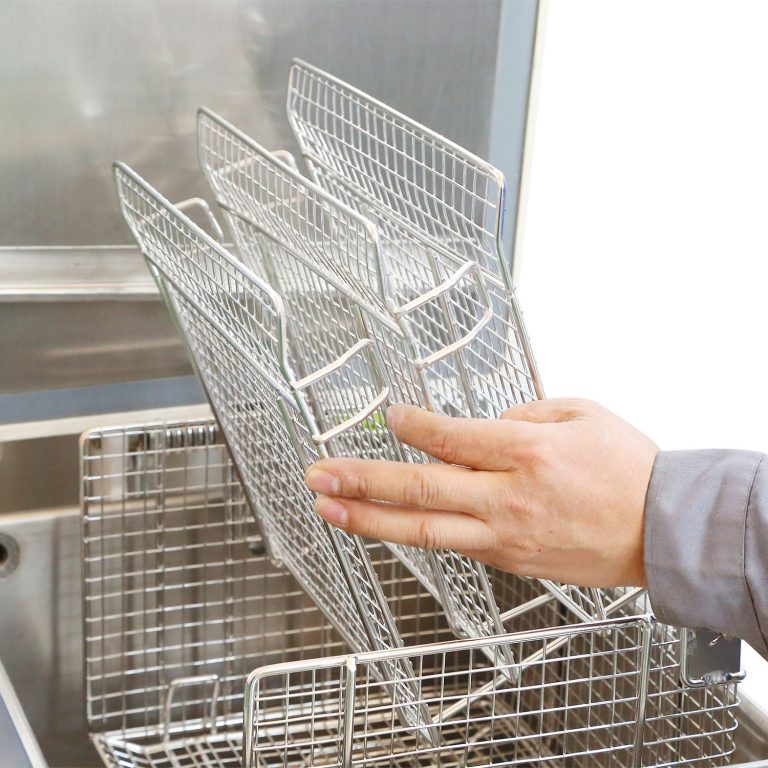
The menu: it decides the mesh
Most kitchens buy one basket style and force every product through it. Works until it doesn't — then it shows up as sticking, soggy drains, a fryer that can't keep pace at noon. Let the menu pick the mesh instead. Mesh density is the one variable that touches everything you drop, so it decides the basket before the catalog does.
Dense mesh drains and holds small items, but it traps batter and clogs with crumbs; open mesh frees the coated and battered stuff and shrugs off debris, then lets thin cuts slip through the holes. There is no universal best mesh — there is the mesh that fits the worst thing you fry at that station, and a second station for the things that do not belong in the same basket.
Shape enters here too. A square-mesh basket portions fries and holds them flat; a round insert suits boiling and pasta work; a long-handle model keeps hands back from a deep well. The shape is a workflow choice the menu makes for you, not a decoration you pick from a page.
Fries: portion and crisp
The board that sells nothing but fries. The square-mesh basket became its standard for a reason: the grid holds a portion flat, drains surface oil fast, and shakes clean in one motion. A lunch rush moving 40 batches of fries past one vat lives or dies on that drain — slow mesh means greasy fries and a basket that holds heat instead of shedding it.
Match the opening to the cut. Thin shoestring needs a tighter grid than a thick steak fry, or the small ones drop through and burn on the elements. A medium square mesh covers most cuts, which is why it's the safe default for a fries-forward board. If your board is nothing but fries, buy the basket for fries and stop there.
Crisp depends on recovery as much as mesh. A full basket of cold fries drops the oil temperature hard, and a deep well recovers slower than a split one does. The square basket lets you keep batches small and frequent — that is the real trick. Small drops recover before the board catches up. Big drops make the whole line wait, and waiting is where crisp goes to die.
Breaded proteins: drain and release
What does breading want from a mesh? Room to let go. An open-enough grid drops the coating and crumbs away from the piece, but not so open that the product falls through. The goal is clean oil contact and a fast drain, because breading holds grease like a sponge if it sits in the basket sweating instead of shaking out.
Coarse mesh also lets breaded items go on the lift. Fine mesh catches the coating edges and tears them; you lose breading in the basket and leave it behind as crumbs that burn on the next drop. A rectangular basket with a moderate opening gives a breaded batch room to settle and a cook room to shake — coating stays on the food, out of the oil.
Watch the sediment zone. Breaded stations throw more crumbs than a fries station, and crumbs in the mesh are the first sign the drain is slowing. A basket that shakes clean on every lift keeps the oil clearer and the flavor honest — the same reason you don't fry chicken where you just fried fish.
Battered and delicate items
Fine mesh, and the fillet is stuck. Batter sets against the wire as it cooks and the small openings trap it, so the piece welds to the grid and tears on the way up — a clean release becomes a tong-and-pray extraction. Sticking starts as a mesh problem long before it becomes an oil problem; open the grid and the batter finds room to set into a shell that lets go on its own.
A wider opening pulls the drag off the lift. The fillet that releases clean leaves the basket whole and the cook's hands free; the one that doesn't gets fished off the wire and lands on the plate in two pieces — a refire nobody scheduled. A fish-heavy board wants the coarser basket and a shake timed to the set, never routed through the fries station on the way.
Crowding finishes what the mesh started. Pack the basket and the pieces steam against each other, fuse in the gaps, and come up pale where they touched. One layer, spread wide, is the rule — the WF-301V rectangular format earns its keep here, where surface area beats depth and a single fillet lying flat fries cleaner than three stacked.
Twin baskets and flavor separation
When the menu mixes fries with coated or battered items, one basket becomes a flavor conveyor — oil carries taste, and a basket that held fish five minutes ago hands that taste to the fries dropped after it. Twins end the argument — one well, two baskets, and two flavor paths that never cross. The fish stays fish, the fries stay fries.
The LG-300 twin basket is built for exactly this. Two products drop, shake and leave independently; small batches recover oil temperature faster, which keeps crispness consistent through a rush. Fast-casual kitchens standardized twins because the menu demanded it, not because the basket was clever.
Twin setups also pace two products at two rates. Fries finish in minutes; chicken takes longer. Run them in one basket and one waits while the other overcooks. Split them and each leaves when it's done. The vat's recovery rate is still the ceiling, but twins use that ceiling better than a single drop does.
Beyond frying: blanching and boiling jobs
Not every basket lives in oil. A pasta or blanching station uses the same mesh logic in water, and the EF-81 pasta basket is the right tool for it — fine round mesh that holds noodles and lifts them out of a boil in one pull. The mesh that would clog in a fryer is perfect in a pot, because water carries no batter and no crumbs.
Blanching vegetables before a flash fry is the same job in reverse — a quick water bath, lift, ice, then a short fry. The basket that does the boil does the blanch, and a round insert fits a stockpot the way a square one never will. Keep these off the fry line; cross-use means cross-flavor, and a pasta basket that smells of fryer oil is a basket you replace, not wash.
Corn dogs, onion rings on a fixture, and anything that needs to hang rather than sit belong in the specialty lane. The 171 specialty basket exists for products that refuse a standard grid, and buying the shaped tool beats welding coat hangers to a frame every time.
Capacity: matching the batch rhythm
Here the math turns honest. Most kitchens buy the biggest basket the well will take and call it throughput — then wonder why the oil temperature craters under a full drop of cold product and the next batch waits while it climbs back. Batch size, recovery time and basket count pull on each other, and the biggest basket usually wins none of them.
The smaller basket, dropped more often, recovers between drops and keeps every batch at temp. Throughput is often higher, not lower, because the vat spends its time frying instead of recovering. Count your peak batches per hour, not the peak pieces per basket — size the station to the rhythm of the rush, not the size of the well.
A slow-draining mesh hides the same problem in a quieter way: grease stays on the product, heat stays in the oil, and the cook shakes longer while the queue grows behind the pass. Set a timer on a Friday-night rush and count how many full drops clear before the board backs up — that number, not the catalog size, is the basket you actually needed. Our maintenance guide covers keeping that mesh draining fast once it's in service.
Quick answers
What mesh is best for french fries?
A medium square mesh is the fries default — it drains surface oil fast and holds a portion flat without dropping thin cuts through. Fine mesh drains quicker but drops shoestring to the elements; coarse mesh frees coated items but lets fries slide and clump together. Match the opening to your cut, tighter for shoestring, wider for steak fries — stop hunting one best mesh, there isn't one.
Why do battered items stick to fine mesh?
Batter sets against the wire as it cooks, and the small openings trap it, so the piece welds to the grid and tears on the way up. A coarser opening gives the batter room to set into a shell that releases on its own, with less drag on the lift. The sticking starts as a mesh choice, not an oil-temperature one — open the grid and the fillet comes up whole.
When should a kitchen run twin baskets?
Run twins when the menu mixes fries with coated or battered items, or when two products fry at different rates and one waits on the other. Oil carries flavor drop to drop, so separate wells keep fries from tasting of the fish dropped before them. Twins also pace each product to its own finish and keep every drop small enough that the vat recovers between batches — small drops recover, big drops wait.
Further reading
→ Fryer accessories buyer's guide: basket types and fit (katom.com)
→ Restaurant cooking safety for fry stations (osha.gov)
Related guides
→ How to choose the right fryer basket size and shape
→ LG-300 twin basket — two products, one well
→ Pasta basket cooking: boiling and blanching jobs
Not sure which basket fits your menu?
Tell us what you fry, the cut sizes, and your fryer model — we'll match the mesh, shape and batch size to your line, from square-mesh fries baskets to twin setups and pasta inserts, and size a custom fit if your well is off-spec.