Friday night rush ends at ten. The line cook pulls the last basket of wings, and a dark film of broken crumbs, blackened batter, and fine salt grit floats on the oil. Leave that slurry to sit and it bakes into a sticky coat on the basket mesh and the tank walls overnight. By Monday the oil smells stale and the baskets need a hard boil-out. None of it has to happen. This is the routine we hand kitchens that want oil to last longer and their baskets to stop aging so fast.
Wednesday, two p.m., and the sports bar's fryers have run since eleven. By now the oil has taken on every basket of wings and every load of fries the lunch crowd ordered. The cook does not see the damage. It is already moving. Each time raw food hits the fat, steam lifts out and carries acids to the surface where heat and air finish the work. The bath turns a little worse with every basket, not all at once.
We watched that bar's oil log. Clean oil at 325 to 375°F carried their fryer for days. Skip the passes for one heavy weekend of lunch and dinner and the same oil turned by Monday — a hundred dollars of oil in the waste barrel. The gap between those two weeks was crumbs. Crumbs carbonize into grit. Grit scorches the flavor and roughs up the basket coating until the next shift inherits a worse starting point.
We watched a sports bar figure this out the hard way. They fry 40 pounds of product an hour on game days. Before they set a schedule, they dumped oil every three days. After filtering each shift, the same oil ran six to seven days with no off taste. Oil cost dropped close to half. The baskets stopped needing a weekly boil-out. Nobody wrote a speech about it. They just stopped pouring money down the drain, one pass at a time.
Thursday close, and a cook lifts the filter arm over the vat. Crumb, batter flecks, breading grit — the envelope catches what you cannot see from the pass, and the oil runs back cleaner. Day two, it darkens slower. Your cook times hold steady instead of drifting as the bath thickens, and the line stops sending out portions that taste like the third fry of the same oil.
A cook we supply thought the filter would fix everything. His oil had already turned. The acid level was up, the smoke point was down, and no pump was going to bring it back. He ran three passes and still dumped the tank Friday. The filter does not rescue old oil. Nothing rescues old oil. It only strips the crumbs before they carbonize. Dissolved salt and water stay in the bath — those come from how he loaded and seasoned, not from the machine. The National Restaurant Association treats load size and moisture as part of the same discipline, and their handling resources at restaurant.org cover the operational side.
Run the pass as a daily reset. Catch the crumbs before they carbonize, so each fresh batch starts from a cleaner line and the next cook inherits less work. That is the whole job. Not magic. Just less grit every shift.
Nine in the morning, and a cook rolls the filter cart to the fryer. Pump, pan, wheels — that is the whole machine. Draw the hot oil through the envelope, send it back to the tank, wheel it to the next vat. A taco stand we supplied ran one cart across three vats that way for two years. Forty dollars a week saved per tank, and nobody bought a second machine.
Then they opened a second location with four vats running flat out from eleven to close. The cart could not keep up. One driver, three stations, and the passes slipped to twice a day instead of four. Oil turned two days early at one tank and they ate the loss in a waste barrel. We put a built-in unit in that kitchen. Crack a valve, oil circles through the cabinet, no pan to lift, and the pass dropped from five minutes to under two. The labor paid the machine back before the first anniversary.
Buy the cart if you run two vats and can spare five minutes between rushes. Buy the built-in if the passes never stop, because the cabinet does the lifting and the pass drops to two minutes. We have watched both on the floor. The only wrong pick is whichever one makes you skip a pass — skipped passes empty the waste barrel, not the brand on the machine.
Monday morning, and the cook tears open a fresh paper envelope. Drop it in the holder, filter, toss it. No washing. No cross-contact worry. A diner we supply burns paper four passes a day and still spends maybe nine dollars a week on envelopes. The only week that hurt was the delivery that slipped — Wednesday ran unfiltered and the oil turned. Two spare cases in the back ever since.
A kitchen we know got tired of that risk on the weekend push, when the volume buries paper. Switched to cloth for Saturday and Sunday, kept paper for the quiet weekdays. Cloth pulls the fine particles paper misses, and after a month their Monday oil read cleaner than their old Friday ever did. Yes, you rinse and dry it. That is a step. But they have not bought a full case of paper in months, and the wash takes the time the missed deliveries used to cost them.
Whichever sits on the cart, swap it the moment the pass runs past sixty seconds. A clogged envelope makes the pump labor and leaves crumbs behind — the exact mess you bought the machine to avoid. Watch the clock. Under a minute, the oil is clean. Over, you are guessing, and guessing is how a Friday batch goes bad on you.
Lunch rush ends. The cook reaches for the filter arm before dinner prep begins, screens the vat at 300 to 325°F, and pulls the lunch crumbs out before they settle to the bottom. Five minutes. That is the difference between oil that lasts and oil that turns by Wednesday.
A diner we supply was dumping a full tank every three days. Three dollars a pound, sixty pounds a tank, two vats. Do the math and it is ugly money walking out the back door. They added a pass after dinner and another after last call. Same oil, nine days. Their food-cost sheet stopped bleeding.
Dinner ends, the pass repeats. A third late-night filter catches the wing dust and batter that pile up after ten. Three passes, none longer than five minutes, carry the bath clear through the week. Quiet kitchen? Drop to one filter a day. Screen the oil whenever it looks hazy or throws foam. Write it on the close checklist. So it never depends on who is working.
Mid-shift, pair the filter with a skimming scoop. Skim floating crumbs every half hour and you pull the bulk before it sinks and scorches. The filter handles what skimming misses. The two together, not the filter alone, are what push oil past the three-day wall. We watched one kitchen add the scoop and pick up two free days from the same oil.
Start of the shift, and a cook dips a strip into the oil. He squints. Pale gold and you are fine. Amber and lunch is catching up to you. Muddy brown and the batch is past its line. Wednesday's wings will taste like Monday's mistakes. Color is the first signal. The one most kitchens ignore until a complaint lands on the pass.
A cook we know lost a Saturday dinner service to foam he read wrong. Early in the night a thin foam cleared as the basket lifted, and he panicked and dumped a good tank — thirty-eight dollars down the drain for nothing. Two hours later a thick blanket sat and steamed after the basket came up. That is broken-down oil holding water it should not. He screened it, it came back the same, and he dumped another forty pounds at peak. He burned money twice in one shift. The second dump was right. The first was panic. Learn which foam is which before Saturday teaches you.
A kitchen we know trusted the look of the oil and lost a Thursday lunch to it. The oil still looked clear, so the cook kept frying until it smoked at 350°F mid-service and the whole batch went bitter. Fresh frying oil holds until 400 to 450°F before it smokes. That drop is the polymers breaking, and no clear-looking oil puts them back. The FDA Food Code sets the food safety and handling framework kitchens follow, and you can review the current edition at fda.gov/fda-food-code.
Friday, sit down and read the log. Date each fill. Tally the filter passes. Mark the day the color or smoke point crosses. After a month you will know your real oil life instead of guessing at it. Then tune the schedule to your volume, not to a number someone printed on a chart you never read.
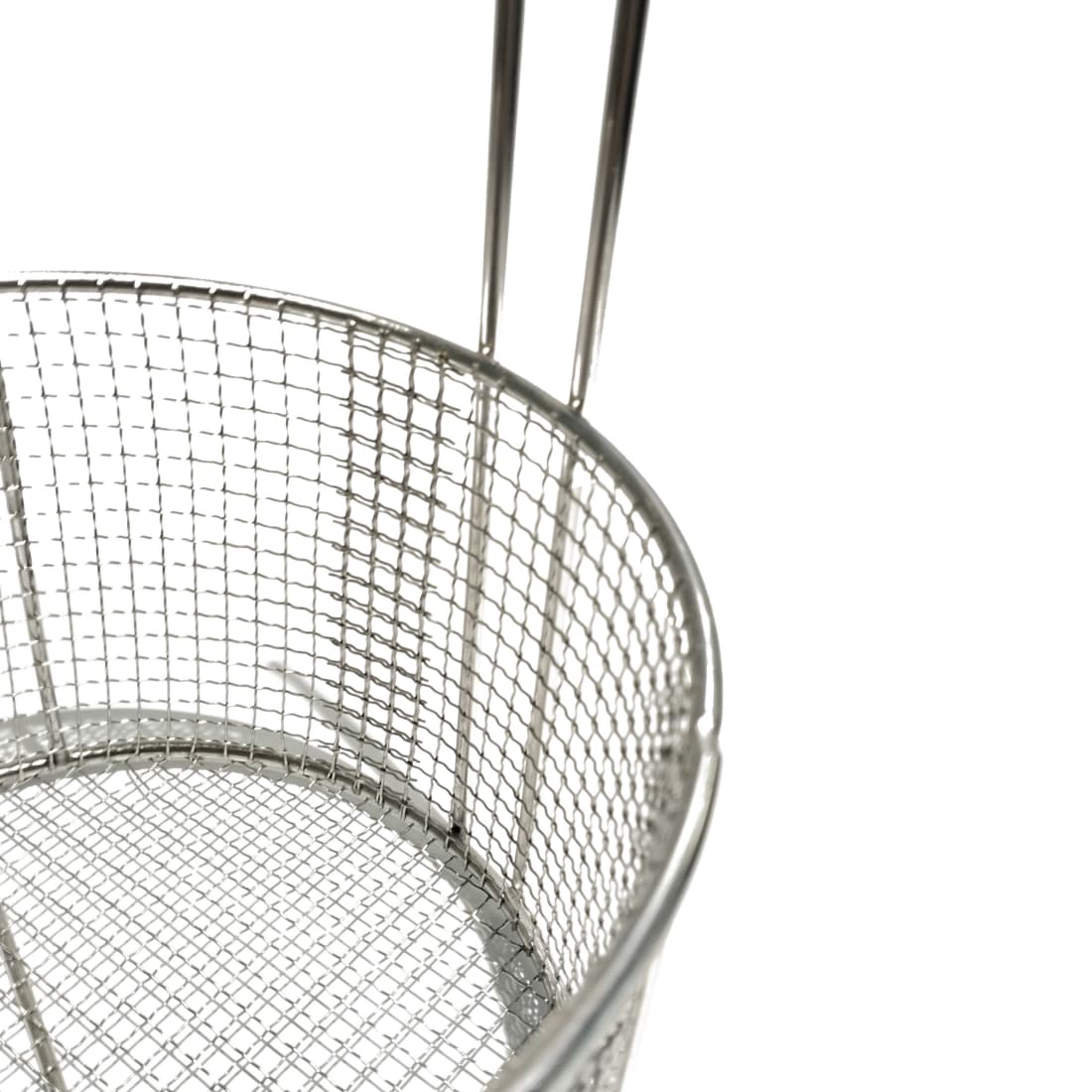
A cook lifts a basket out of the tank and the mesh comes up black. Dirty oil laid a carbon film across the wires, and it baked harder with every heat cycle. Crumbs and coating glue the mesh until it clogs. A clogged basket fries unevenly and needs aggressive scrubbing that wears the stainless faster than the food ever did. You paid real money for that steel. Stop grinding it down with a brush at midnight.
A cook we supply learned this about salt the hard way. Battered and seasoned food sheds salt into the bath. Salt-laden oil pits 201 and 304 frames alike. The filter lifts the solid grit, but dissolved salt still needs a rinse. That is why the full after-care steps live in our fryer basket maintenance guide and our rust prevention guide.
Boil-out day, lift the baskets out first. Caustic boil-out solution eats at the coating and seams if the baskets sit in it. Rinse them in clear water, dry them, and store them off the tank. Clean oil then meets a clean basket, and the pair lasts years instead of seasons.
Sizing new baskets for a filtration-friendly rig? Our basket sizes chart shows which models fit mainstream fryers, including the WF-301V we build for high-volume lines. Pick the right fit and the oil does the rest of the work for you.
Filter after every shift if you run hard — two or three passes a day, no skipping. A quiet spot can get by with one pass a day. But the moment the oil looks hazy or throws foam while it fries, screen it. Wait for the smell and the batch is already gone.
Yes, and you should. At 300 to 325°F the oil runs through the envelope fast and carries off the fine crumb. Only cool it below 200°F if your pump is not rated for hot oil. Let it sit and the crumbs settle where you cannot reach them.
No. Filtration slows the carbon and salt buildup, but baskets still need a rinse after each boil-out and a dry place to live. See our rust prevention guide for the full routine. The filter cleans the oil. It does not dry your steel for you.
When fresh, frying oil smokes near 400 to 450°F. Once it starts smoking at 350°F or lower while you are cooking normally, the polymers have broken down and the batch belongs in the barrel. Trust the thermometer over the look of the oil — a batch can still seem clear and already be past saving.
Tell us your fryer model and daily volume, and we will size OEM baskets that fit and last.
Request a Quote